GRP Grating Manufacturing: Balancing Quality and Cost-Effectiveness
GRP Grating has emerged as a revolutionary material for industrial and commercial buildings. Its combination of lightweight strength, corrosion resistance, and durability makes it an increasingly popular alternative to traditional steel and timber. However, achieving both high quality and cost-effectiveness in GRP Grating manufacturing requires precision, expertise, and careful selection of materials and processes.
This article explores the manufacturing process of GRP Grating, the factors that influence quality, cost-saving strategies, and the benefits for industrial and commercial applications.
Understanding GRP Grating
GRP (Glass Reinforced Plastic) Grating is a composite material made from thermosetting resin and glass fibers. The fibers provide structural strength, while the resin binds them into a durable, corrosion-resistant form. The resulting product is lightweight, non-conductive, fire-retardant, and requires minimal maintenance.
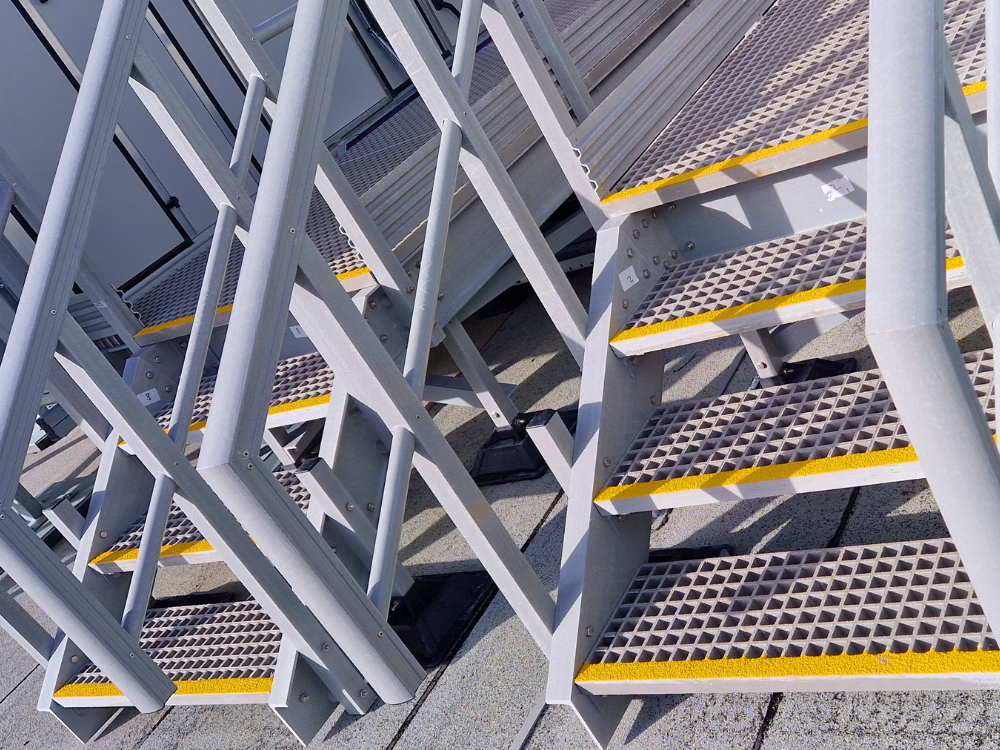
GRP Gratings are commonly used in platforms, walkways, flooring, and structural supports in industrial plants, commercial facilities, and infrastructure projects. They are preferred over metal for their resistance to rust, chemical exposure, and environmental wear.
Key Manufacturing Processes
The quality and cost-effectiveness of GRP Grating depend heavily on the manufacturing method. The two most common processes are:
Pultrusion Process
Pultrusion involves pulling glass fibers through a resin bath and then through a heated die to form continuous profiles. This process ensures uniform strength, precise dimensions, and smooth finishes. Pultruded GRP Gratings are ideal for high-load applications and long spans, offering excellent strength-to-weight ratios.
Molding Process
Molding involves casting resin and fibers into molds of desired shapes and sizes. Moulded GRP Gratings are highly impact-resistant and suited for environments where chemical exposure is frequent. This process allows for custom designs and intricate patterns, making it ideal for specialized industrial applications.
Factors Influencing GRP Grating Quality
To achieve high-quality GRP Grating while remaining cost-effective, manufacturers must carefully control several factors:
- Material Selection:
High-quality resins and glass fibers ensure durability, corrosion resistance, and fire safety. While premium materials may increase initial costs, they reduce long-term maintenance and replacement expenses. - Fiber Orientation and Density:
Proper alignment of fibers enhances structural strength and load-bearing capacity. Pultruded gratings typically have unidirectional fibers for maximum strength, while molded gratings may use multidirectional fibers for impact resistance. - Resin-to-Fiber Ratio:
The proportion of resin to glass fibers directly affects strength, flexibility, and longevity. Manufacturers must balance resin content to prevent brittleness while maintaining sufficient fiber reinforcement. - Curing and Heat Control:
Controlled curing ensures the resin fully hardens and bonds with fibers, producing consistent quality. Temperature and time control are critical for avoiding weak spots and defects.
Cost-Effective Manufacturing Strategies
Manufacturers can achieve cost efficiency without compromising quality by implementing strategies such as:
- Optimized Material Use: Careful calculation of resin and fiber requirements reduces waste and lowers material costs.
- Automation in Pultrusion: Automated pultrusion lines ensure faster production, consistent quality, and reduced labor expenses.
- Standardization: Producing standard sizes and profiles in bulk reduces manufacturing complexity and overall costs.
- Quality Assurance: Early detection of defects reduces rework and material loss, improving overall cost-effectiveness.
Advantages of GRP Grating in Industrial and Commercial Buildings
GRP Grating offers multiple benefits, making it a preferred choice in construction and industrial environments:
Corrosion Resistance
GRP Grating does not rust and withstands chemical exposure, making it ideal for water treatment plants, chemical factories, and marine applications.
Lightweight yet Strong
Its high strength-to-weight ratio facilitates easy handling, reduces installation time, and lowers labor costs, especially in large-scale projects.
Fire Retardancy and Safety
GRP Gratings can be manufactured with fire-retardant resins, providing safe solutions for commercial and industrial facilities, including electrical rooms and offshore structures.
Low Maintenance
GRP Grating requires minimal upkeep compared to steel or timber. There is no need for painting, galvanizing, or regular inspections, leading to long-term cost savings.
Environmental Sustainability
Long lifespan, reduced material consumption, and recyclability make GRP Grating an environmentally responsible choice for modern construction projects.
Common Applications
GRP Grating manufactured with high quality and cost efficiency finds applications in a wide variety of settings:
- Industrial Platforms and Walkways: Chemical plants, factories, and wastewater treatment facilities.
- Commercial Buildings: Shopping centers, offices, and parking structures for non-slip flooring and structural supports.
- Marine and Offshore Installations: Jetties, offshore platforms, and docks.
- Transportation Infrastructure: Rail platforms, airport maintenance areas, and service walkways.
Balancing Quality and Cost
The challenge in GRP Grating manufacturing is maintaining a balance between superior quality and cost-effectiveness. Using high-quality materials and advanced production methods ensures a product that performs reliably for decades. Simultaneously, optimizing production efficiency, reducing waste, and standardizing products help keep costs competitive for large-scale industrial and commercial applications.
FAQs About GRP Grating
What is the difference between pultruded and molded GRP Gratings?
Pultruded GRP Gratings are pulled through a die for uniform strength and long-span applications, while molded gratings are cast into molds for impact resistance and complex designs.
Can GRP Gratings be customized for specific building needs?
Yes. GRP Gratings can be manufactured in various sizes, thicknesses, and colors to meet unique industrial or commercial requirements.
Why is GRP Grating considered cost-effective despite a higher upfront price?
Although initial costs may be higher, GRP Gratings require minimal maintenance, resist corrosion, and have a long lifespan, reducing total cost of ownership over time.
Conclusion
GRP Grating manufacturing is a careful blend of material science, precision engineering, and cost management. By using high-quality resins and fibers, optimizing production methods, and implementing quality control, manufacturers can produce GRP Gratings that are durable, safe, and cost-effective.
For industrial and commercial buildings, GRP Gratings provide a long-term solution that combines strength, corrosion resistance, fire safety, and low maintenance. As industries increasingly demand reliable and sustainable materials, GRP Gratings stand out as a versatile and smart investment.